Table of contents
Overview
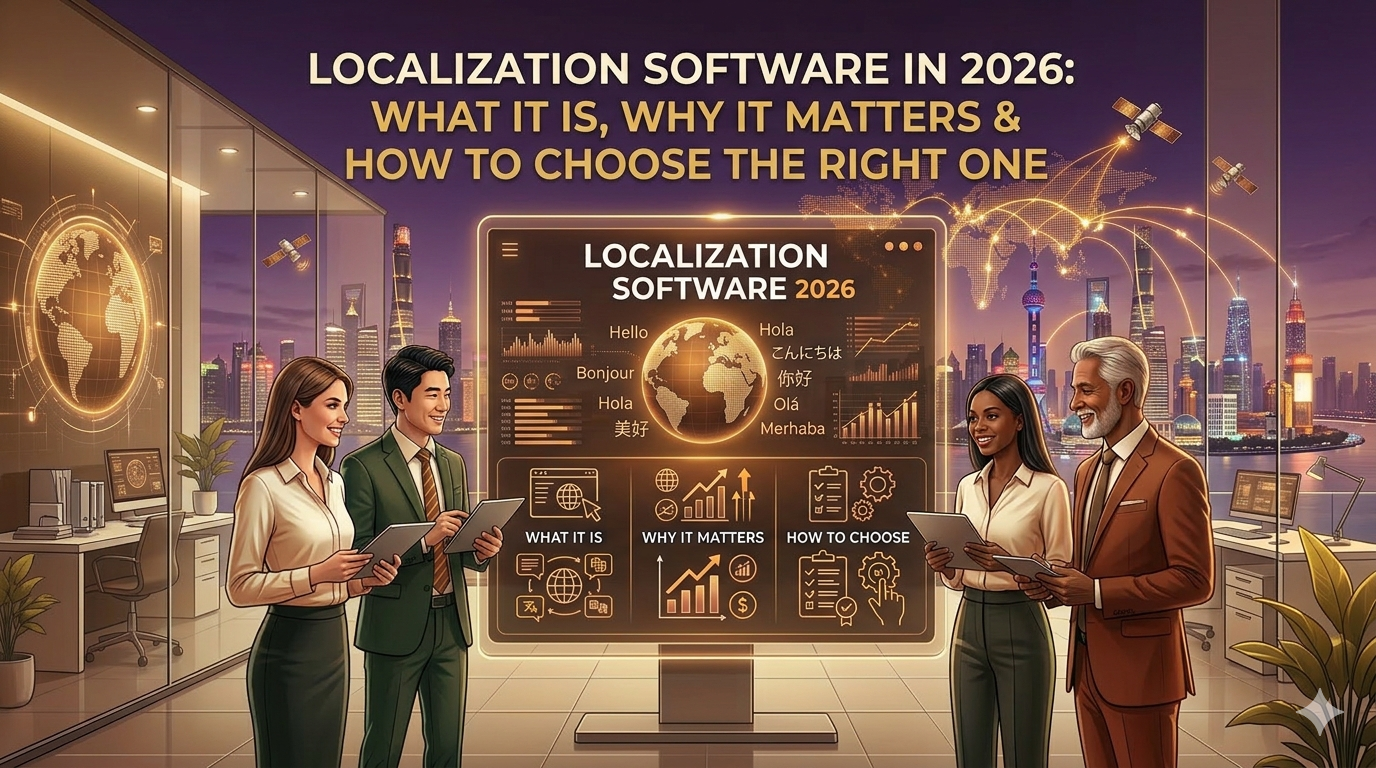
Localization software in 2026 plays a crucial role in helping businesses adapt content for global audiences efficiently. Moreover, as digital learning expands, tools like Doctor eLearning simplify translation, editing, and localization without needing original files. In addition, choosing the right platform ensures consistency, faster workflows, and better learner engagement. Therefore, understanding how localization software works is essential for scaling your content globally with confidence.
What is Localization Software and Why Your Business Needs It
Localization software is a powerful tool that helps businesses adapt their content—such as websites, apps, and eLearning courses—into different languages and cultural contexts. Moreover, as companies expand globally, the need for accurate, fast, and scalable localization becomes essential for reaching diverse audiences. In addition, advanced platforms like Doctor eLearning not only streamline translation but also allow you to edit and optimize course content without requiring original source files. Therefore, using the right localization software ensures better consistency, improved user experience, and faster global growth—making solutions like Doctor eLearning a top choice for modern businesses.
Localization vs Translation: Understanding the Key Differences
| Aspect | Translation | Localization |
|---|---|---|
| Definition | Translation focuses on converting text from one language to another; however, it keeps the original meaning intact. | Localization, on the other hand, adapts content to fit cultural, regional, and linguistic preferences. |
| Scope | It is limited to language conversion; therefore, it does not consider cultural nuances. | In contrast, localization goes beyond language and includes visuals, tone, currency, and formats. |
| Cultural Adaptation | Translation does not deeply adapt cultural elements; instead, it mainly focuses on words. | Meanwhile, localization ensures content feels native to the target audience. |
| Complexity | Generally, translation is simpler and faster to execute. | However, localization is more complex as it involves multiple elements and deeper customization. |
| Use Case | It is suitable for basic documents, articles, or simple communication. | On the contrary, localization is essential for websites, apps, and eLearning platforms. |
| User Experience | Translation may not always provide a natural experience; thus, it can feel slightly generic. | As a result, localization delivers a more personalized and engaging user experience. |
| Example | For instance, translating “Hello” to “Hola” is straightforward translation. | Whereas, changing date formats, images, and tone along with language is localization. |
| Tools & Platforms | Basic CAT tools are often sufficient; therefore, the process remains limited. | Additionally, advanced tools like Doctor eLearning support full localization workflows efficiently. |
Top 15 Localization Software Platforms Reviewed
| Rank | Platform | Best For | Key Features | Pricing | Rating |
|---|---|---|---|---|---|
| 1 | Doctor eLearning (Top Pick) | All eLearning Teams & Businesses | AI-powered localization, Multilingual support, LMS integration, Easy dashboard | Custom Pricing | 5.0 |
| 2 | Phrase | Large eLearning Teams | AI translation, TMS, API integration | From $27/mo | 4.8 |
| 3 | Smartcat | Freelancers & Agencies | CAT tool, Marketplace, Automation | Free plan | 4.7 |
| 4 | Crowdin | Software & eLearning | 600+ integrations, AI suggestions | From $25/mo | 4.6 |
| 5 | Transifex | Content-heavy Platforms | Real-time translation, OTA updates | From $10/mo | 4.5 |
Doctor Elearning – Features & Capabilities
Translation It supports translation workflows using DOCX and XLIFF-based formats, allowing content to be localized into multiple languages. It supports all types of xliffs and doc outputs articulate, adobe captivate, ispring etc. It has language formality feature to control the tone of translation it has world class engines to translate and AI Translation. It supports all the languages as an input and output. It has word count and character count feature as well.
Compression It compresses eLearning/SCORM content into smaller file sizes, which helps courses load faster, reduces waiting times for learners, and makes files easier to distribute across various LMS platforms. Organizations can also reduce costs associated with data storage and transmission.
Editing Doctor eLearning’s editing feature empowers users to modify or replace images, audio, and video in published eLearning content independently, without relying on the original eLearning vendor or authoring tool. This enables quick updates to course materials to keep content fresh, relevant, and engaging.
Compatibility It supports SCORM 1.2 and SCORM 2004 packages and commonly used media formats such as PNG/JPG, MP3, and MP4/WebM.
In short, Doctor eLearning is a post-production tool for eLearning content — useful when you need to update or optimize courses but no longer have access to the original authoring tool or source project files.
How to Choose the Right Localization Software for Your Needs: Pricing Comparison
| Tool | Entry Price | “Free” Tier Details | Ideal For |
| Doctor eLearning | Free to Start | Pay as you go model | eLearning Designers |
| Smartcat | $1,200 / year | 15-Day Trial (10k “Smartwords”) | Content Teams |
| Lokalise | $144 / month | Free Forever (10k words/year limit) | Software Developers |
| Trados Studio | $408 / year | 30-Day Free Trial (Full features) | Pro Translators |
Try Translation Feature for Free
Translating Articulate 360 or SCORM content? Try Doctor eLearning free — upload your XLIFF or DOCX and get translated output in minutes.
FAQ
Q: What file formats are supported by Doctor eLearning for localization?
A:Doctor eLearning supports multiple formats such as SCORM packages, XLIFF, DOCX, and other eLearning content files
Q: Is Doctor eLearning free?
A: Yes — no credit card required to start.
Q: Can Doctor eLearning localize SCORM and eLearning courses?
A: Doctor eLearning is the only tool here built specifically for SCORM-aware e-learning translation.
Q: Does Doctor eLearning require source files for editing or translation?
A: No, Doctor eLearning does not require source files; instead, it allows direct editing and localization of eLearning content, making the process faster and more efficient.
