Table of contents
- Unlocking the Potential of Articulate Storyline 360 DOCX Translation
- What is Articulate Storyline 360 DOCX Translation?
- Why Articulate Storyline 360 DOCX Translation matters for L&D teams in 2026
- Streamlining the Translation Process
- Maintaining Consistency in Translations
- Cost-Effective Localization Strategies
- Real-World Examples of Successful Translations
- How Doctor Elearning approaches Articulate Storyline 360 DOCX Translation
- Common Articulate Storyline 360 DOCX Translation mistakes to avoid
- Frequently Asked Questions
- Conclusion
Unlocking the Potential of Articulate Storyline 360 DOCX Translation
If you’ve been struggling with Articulate Storyline 360 DOCX Translation, you’ve probably read the same 10 guides. Here’s what they’re all missing: deeper implementation strategies and pricing insights. That’s what this guide covers.
Key Takeaways
- Articulate Storyline 360 DOCX Translation streamlines multilingual course deployment.
- Doctor Elearning’s AI-powered workflow reduces localization time.
- Avoid common pitfalls in translation processes.
What is Articulate Storyline 360 DOCX Translation?
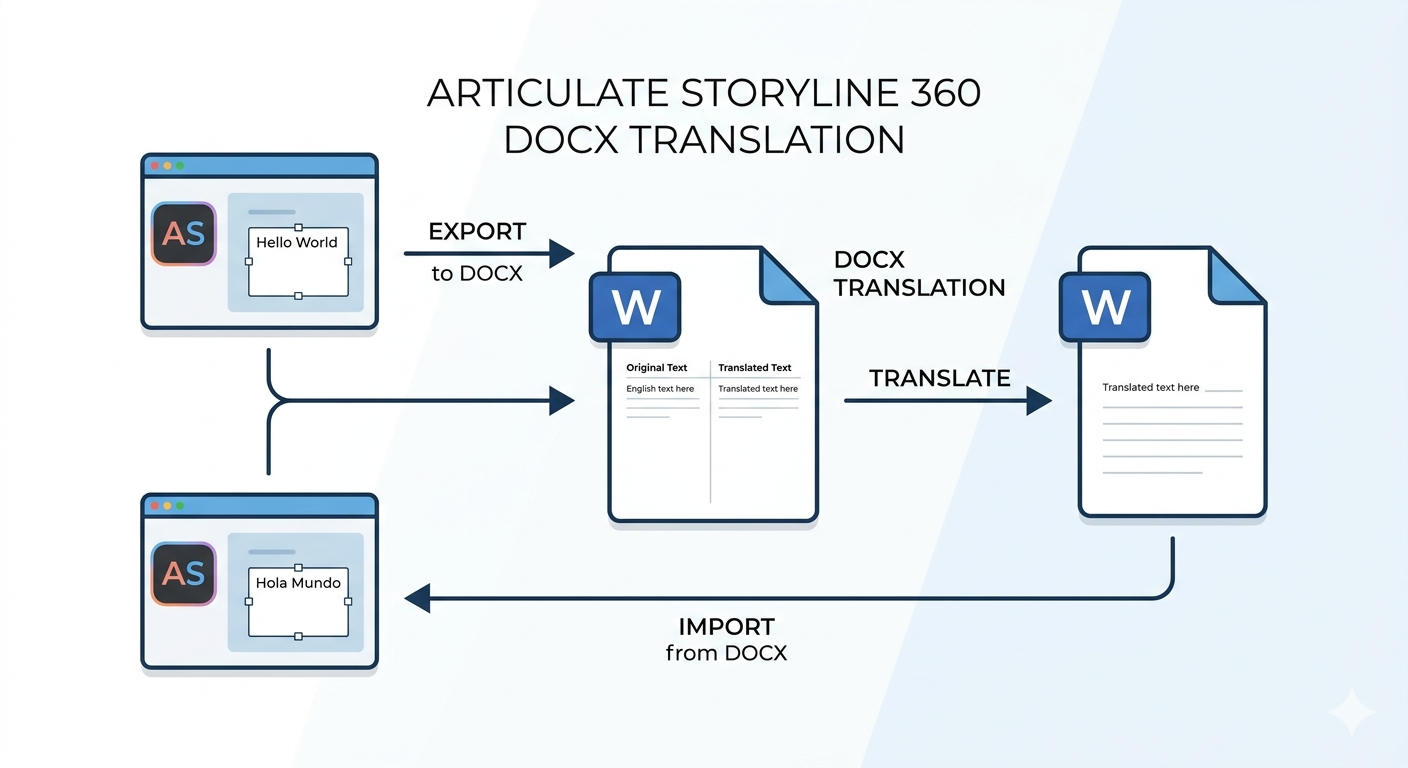
Articulate Storyline 360 DOCX Translation refers to the process of translating exported DOCX files from Articulate Storyline 360 into multiple languages. Doctor Elearning tool enhances this process by allowing direct modifications without source files.
Why Articulate Storyline 360 DOCX Translation matters for L&D teams in 2026
In 2026, the demand for multilingual eLearning content is skyrocketing. Learning and Development (L&D) teams must leverage Articulate Storyline 360 DOCX Translation to ensure consistent training across global markets. We believes that efficient translation processes will be key to maintaining a competitive advantage.
As organizations expand globally, they face the challenge of delivering training in various languages. This is where effective translation becomes essential. By using the right tools, teams can ensure that their content is not only translated but also culturally relevant. This relevance helps in engaging learners more effectively.
Moreover, the ability to quickly update content in multiple languages is crucial. With Doctor Elearning, L&D teams can make changes without going back to the original authoring tools. This flexibility allows for faster updates and ensures that all learners receive the most current information.
Streamlining the Translation Process
Explore how automating the translation of Articulate Storyline 360 DOCX files can save time and resources. Doctor Elearning AI-powered features allow for quick updates and consistent terminology, ensuring quality across languages.
First, automation reduces the manual effort involved in translation. This means that L&D teams can focus on more strategic tasks rather than getting bogged down in repetitive work. Additionally, the AI tools help maintain consistency in terminology, which is vital for brand voice and clarity.
Furthermore, the integration of AI in the translation process allows for faster turnaround times. As a result, organizations can deploy their training programs more quickly. This speed is especially important in fast-paced industries where time is of the essence.
Maintaining Consistency in Translations
Learn about the importance of maintaining terminology consistency when translating eLearning content. Doctor Elearning supports DOCX/XLIFF workflows to ensure that all translations align with your brand’s voice.
Consistency is key in any translation effort. It helps learners understand the material better and reduces confusion. For instance, using the same terms for specific concepts across all languages reinforces learning.
Moreover, Doctor Elearning support for various file formats means that teams can easily manage their translation projects. This flexibility allows for smoother workflows and better collaboration among team members. In addition, it helps in tracking changes and maintaining version control.
Cost-Effective Localization Strategies
Discover how to reduce costs associated with eLearning localization. Doctor Elearning SCORM compression and editing capabilities minimize storage and bandwidth expenses while maximizing efficiency.
First, SCORM compression significantly reduces the file size of eLearning courses. This reduction leads to faster loading times and improved performance on Learning Management Systems (LMS). Consequently, organizations save on storage and bandwidth costs.
Secondly, by enabling direct editing of published courses, Doctor Elearning eliminates the need for redevelopment. This feature not only saves time but also cuts down on costs associated with hiring external vendors for updates.
In summary, these cost-effective strategies allow organizations to allocate their resources more efficiently. They can invest in other areas of their training programs, enhancing overall learning experiences.
Real-World Examples of Successful Translations
Review case studies where organizations successfully implemented Articulate Storyline 360 DOCX Translation using Doctor Elearning. Highlight the outcomes and lessons learned.
For example, a global tech company faced challenges in training its diverse workforce. By using Doctor Elearning, they translated their courses into 15 languages. This effort led to a 30% increase in course completion rates.
Another case involved a healthcare organization that needed to train staff across multiple regions. They utilized the AI-powered translation features to ensure that all materials were culturally relevant. As a result, they saw improved engagement and understanding among their employees.
These examples illustrate the effectiveness of using Doctor Elearning for translation. Organizations can achieve their training goals more efficiently and effectively.
How Doctor Elearning approaches Articulate Storyline 360 DOCX Translation
Doctor Elearning employs a unique methodology for Articulate Storyline 360 DOCX Translation that focuses on direct editing of published courses. This approach ensures rapid updates and localization without the need for source files.
By allowing teams to edit content directly, Doctor Elearning reduces the time spent on revisions. This means that organizations can respond quickly to changes in their training needs. Additionally, this method helps maintain the integrity of the original content.
Moreover, the all-in-one toolkit provided by Doctor Elearning simplifies the translation process. Teams can compress, edit, and translate all within one platform. This integration leads to a more streamlined workflow and better collaboration among team members.
Common Articulate Storyline 360 DOCX Translation mistakes to avoid
Identify common pitfalls in the translation process, such as overlooking cultural nuances or failing to maintain consistency.
First, one common mistake is not considering cultural differences. This oversight can lead to misunderstandings and disengagement. Therefore, it is crucial to adapt content to fit the cultural context of the target audience.
Another mistake is failing to keep terminology consistent. Inconsistent terms can confuse learners and dilute the effectiveness of the training. To avoid this, use glossaries and style guides throughout the translation process.
Lastly, organizations often underestimate the importance of testing translated content. Before launching, it is essential to review and test the materials to ensure they meet quality standards. This step can save time and resources in the long run.
Frequently Asked Questions
What is the benefit of using Doctor Elearning for translation?
Using Doctor Elearning streamlines the translation process. It allows for direct editing of published courses, which saves time and reduces costs. Additionally, it supports multiple languages, making global training easier.
How does SCORM compression help in eLearning?
SCORM compression reduces the file size of eLearning courses. This leads to faster loading times and improved LMS performance. Consequently, organizations save on storage and bandwidth costs.
Can I edit content without the original source files?
Yes, Doctor Elearning allows you to edit published courses directly. This feature eliminates the need for original source files, making updates quicker and easier.
How many languages can I translate my content into?
Doctor Elearning supports translation into over 130 languages. This capability enables organizations to reach a global audience effectively.
Conclusion
In summary, Articulate Storyline 360 DOCX Translation is essential for effective global training. By leveraging Doctor Elearning, organizations can streamline their translation processes and enhance their eLearning content. This tool not only saves time and costs but also ensures consistency and quality across languages. Try Doctor Elearning today to optimize your multilingual training efforts.
