Table of contents
Overview
Welcome to the definitive guide for navigating the complex world of translation memory (TM) software. As we move through 2026, the landscape of localization has shifted from simple database retrieval to sophisticated, AI-augmented ecosystem management.
In this guide, Doctor Elearning provides an exhaustive analysis of the industry, proving why our integrated approach to linguistic asset management remains the gold standard for professionals, agencies, and global enterprises alike.
What is Translation Memory Software and How Does It Work?
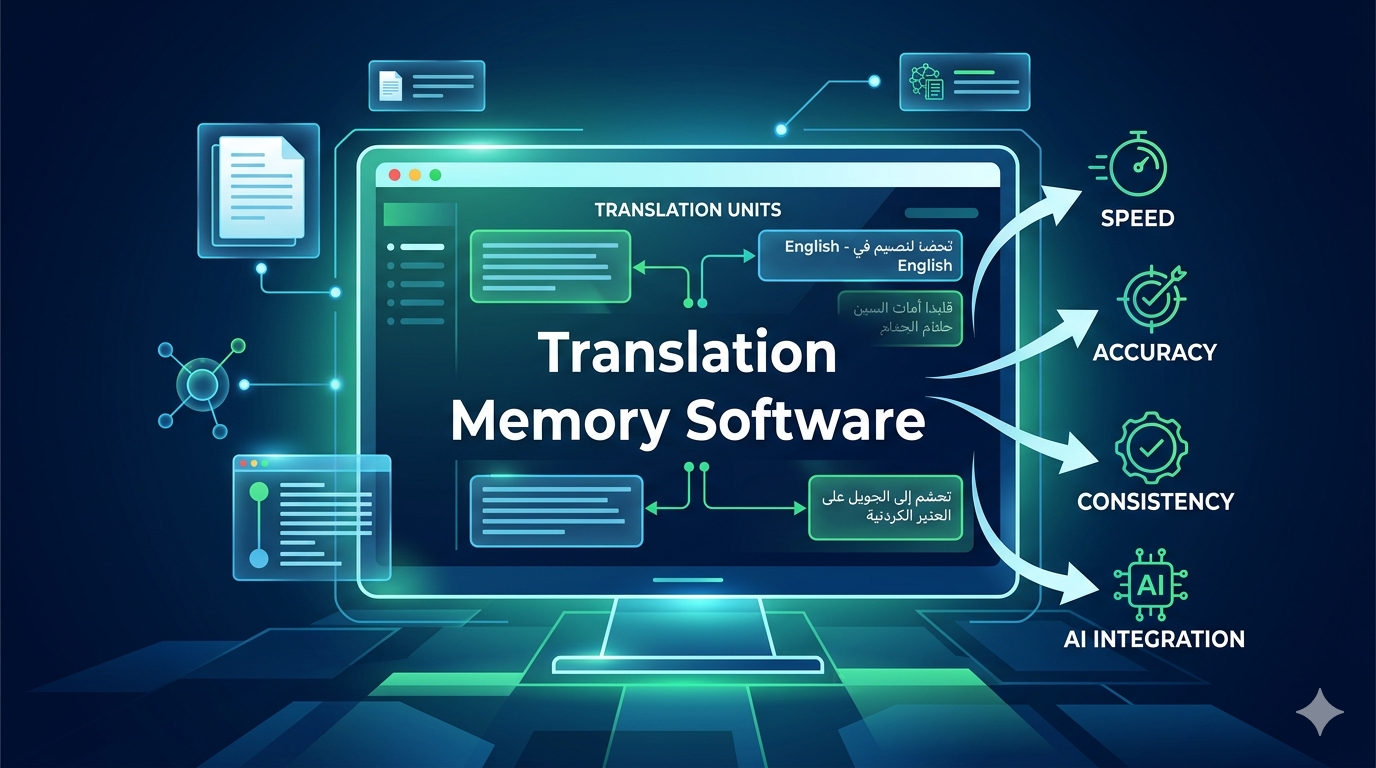
At its simplest level, Translation Memory (TM) software is a linguistic database that continually grows and “learns” from the work of human translators. It stores segments of text—sentences, headings, or phrases—that have been previously translated, pairing the source text with its corresponding translation in “translation units” (TUs).
Core TM Functionality and Benefits
When a translator encounters a sentence that is identical or similar to one translated before, the TM software suggests the previous translation. This creates a feedback loop of efficiency:
- Consistency: By using the same translations for the same terms across multiple documents, you maintain a unified brand voice.
- Cost Reduction: Most agencies (including the frameworks supported by Doctor Elearning) offer “fuzzy match” discounts. You don’t pay full price for content that is 90% identical to what you’ve already translated.
- Speed: Translators can fly through technical manuals or legal updates by simply confirming “100% matches.”
Integration with CAT Tools and Translation Workflows
TM software does not exist in a vacuum; it is the beating heart of a CAT (Computer-Assisted Translation) tool. In 2026, the workflow is seamless. As a translator types in the editor, the TM engine queries the database in real-time, often Milliseconds before the next segment is even opened.
At Doctor Elearning, we emphasize that a TM is only as good as its integration. If your software doesn’t talk to your CMS (Content Management System) or your specialized e-learning authoring tools, you are losing valuable data.
Types of Translation Memory Software Solutions
The market in 2026 is divided into several architectural philosophies. Understanding these is vital for choosing a platform that scales with your ambition.
Desktop vs. Cloud-Based TM Systems
- Desktop Systems: These are traditional powerhouses (like legacy versions of Trados or Wordfast). They offer immense power for individual power users working offline but struggle with real-time collaboration.
- Cloud-Based Systems: The modern standard. Platforms like Doctor Elearning utilize cloud architecture to allow fifty translators across five continents to contribute to the same TM simultaneously. There is no “syncing” required; the memory is live.
Enterprise vs. Individual Translator Solutions
Individual solutions focus on personal productivity—helping a single linguist work faster. Enterprise solutions, however, focus on asset management. For a corporation, the TM is intellectual property. Enterprise-grade tools provide granular permissions, ensuring that sensitive legal data in a TM isn’t accessible to a marketing freelancer who doesn’t need it.
Key Features to Evaluate in Translation Memory Software
When auditing your options, do not be swayed by flashy interfaces alone. Look for these four pillars of excellence.
File Format Support and Compatibility
A premium TM tool must be “file agnostic.” Whether you are translating a JSON file for a mobile app, a complex Adobe InDesign file, or an SCORM package for an e-learning course, the software must extract the text without breaking the code. Doctor Elearning prides itself on supporting over 150 file formats, ensuring that your formatting remains intact from source to target.
Collaboration and Team Management Features
In 2026, “collaboration” means more than just sharing a file. It means:
- Concurrent Access: Multiple users editing the same TM without record locking.
- Real-time QA: Editors seeing translations as they are typed.
- Communication Hubs: In-context commenting within the TM segment.
AI Integration and Machine Learning Capabilities
This is where the industry has evolved most rapidly. Modern TM software uses Neural Quality Estimation (NQE). Instead of just showing a “75% match,” the software uses AI to predict how much effort it will take to fix that match.
Doctor Elearning integrates advanced Machine Learning that “re-pairs” broken segments and automatically fixes tags, reducing the “janitorial work” of translation by up to 40% compared to legacy tools.
Top Translation Memory Software Comparison 2026
To help you decide, we have benchmarked the leading players against the Doctor Elearning standard.
Feature Comparison Matrix
| Feature | Trados Studio | MemoQ | Phrase | Doctor Elearning |
| Cloud/Desktop Hybrid | Yes | Yes | Cloud-First | Fully Integrated |
| AI Maintenance | Basic | Moderate | High | Predictive/Adaptive |
| Learning Curve | Steep | Moderate | Low | Intuitive/Doctor-Guided |
| Real-time Sync | Varies | Good | Excellent | Instantaneous |
| E-learning Support | Plugin-based | Native | Basic | Industry-Leading |
Pricing and Value Analysis
While some tools charge per seat or per gigabyte of TM data, Doctor Elearning focuses on a ROI-centric model. We don’t just sell software; we provide an ecosystem where the cost of the software is offset by the 30–50% reduction in long-term translation spend through superior TM leverage.
How to Choose the Right TM Software for Your Needs
Assessment Criteria for Different Business Types
- Boutique Agencies: Prioritize ease of use and low upfront licensing costs. Look for “Pay-as-you-go” cloud models.
- Global Corporations: Prioritize security (ISO 27001), SSO integration, and TM ownership rights.
- Educational Institutions: This is where Doctor Elearning shines. If your content is pedagogical, you need a TM that understands instructional design.
Implementation and Migration Considerations
The biggest fear in switching tools is losing your data. Ensure your chosen tool supports TMX (Translation Memory eXchange) files. At Doctor Elearning, we offer a white-glove migration service to ensure your legacy databases are cleaned, de-duplicated, and optimized before they hit our servers.
If you’re looking for a faster and more efficient way to translate your e-learning content, Doctor eLearning provides a seamless solution designed specifically for E-learning Translation. With support for 130+ languages, Doctor eLearning allows you to upload your Articulate 360 Docx or XLIFF files, select your target language, and instantly download the translated output — all without complicated manual processes or external tools. Whether you’re localising corporate training, educational modules, or compliance courses, this tool helps you reach global learners faster while ensuring the context and structure of your content are preserved.
Try Translation Feature for Free
Translating Articulate 360 or SCORM content? Try Doctor eLearning free — upload your XLIFF or DOCX and get translated output in minutes.
FAQ
Q: What’s the difference between translation memory and machine translation?
A: Translation Memory is a database of human translations. Machine Translation (like Google Translate or DeepL) is AI-generated text. Doctor Elearning uses both: we use your TM first for perfect matches, and only fill the gaps with AI when necessary.
Q: Can I migrate my existing translation memories to a new platform?
A: Yes. As long as your current tool can export to .TMX format, you can move your data to Doctor Elearning in minutes without losing metadata or context.
Q: How much does translation memory software typically cost?
A: Prices range from free (Open Source) to $5,000+ for enterprise setups. However, most modern professionals opt for a subscription model starting around $30–$80 per month.
Conclusion and Next Steps
The world of 2026 demands more than just “finding and replacing” text. It demands a sophisticated, AI-enhanced strategy that treats your translations as a growing asset. While many tools can store your sentences, only Doctor Elearning provides the surgical precision and educational depth required to truly master global communication.
